Mold Inspection & Testing Services in Sacramento
Request an estimate from a local provider
Mold inspection near me is a common search for a good reason. You see a stain, smell something musty, or feel a damp wall, and you want facts before you spend money. An inspection shows where the mold is, how far it has spread, and what is feeding it.
Secethnic Mold Help is a referral service. We do not inspect or test anything ourselves. We connect you with an independent provider in the Sacramento area who does. The provider looks at your home, takes samples if they make sense, and explains the results in plain words. Small spot, small fix. Getting a clear answer early is how you keep it small.
Spot mold? Look, photo, then call
Start with your eyes and your phone. Look at the spot. Take clear photos with a ruler or coin beside it. Note the date. Then check the area for damp, drips, or a musty smell.
This takes five minutes. It gives a provider something real to work from. It also helps if you later need to document damage for a claim.
Stop the water before anything else
Mold needs moisture. Find the source if you can. Wipe up standing water. Run a fan or a dehumidifier. Shut off a leaking supply line if you know where the valve is.
Drying does not remove mold that already grew. But it can stop it from spreading while you wait for an inspection.
What not to do yet
Do not scrub, sand, or bleach the spot. Do not blast it with a fan pointed at the wall. That can throw spores into other rooms. Do not cut open drywall to peek inside.
Know when to stop. If the patch is bigger than a few feet, or you feel sick around it, hand it off.
When an inspection makes sense
Book one if you smell mold but cannot see it. Book one after a leak, a roof problem, or a winter rain event that soaked a wall. Book one before buying or selling a home. Book one if anyone in the house has ongoing stuffiness or coughing that eases when they leave.
Older bungalows and 1950s to 1980s tract homes often hide moisture in crawl spaces, attics, and behind stucco. A look from a pro can reach those spots.
What happens during a mold inspection
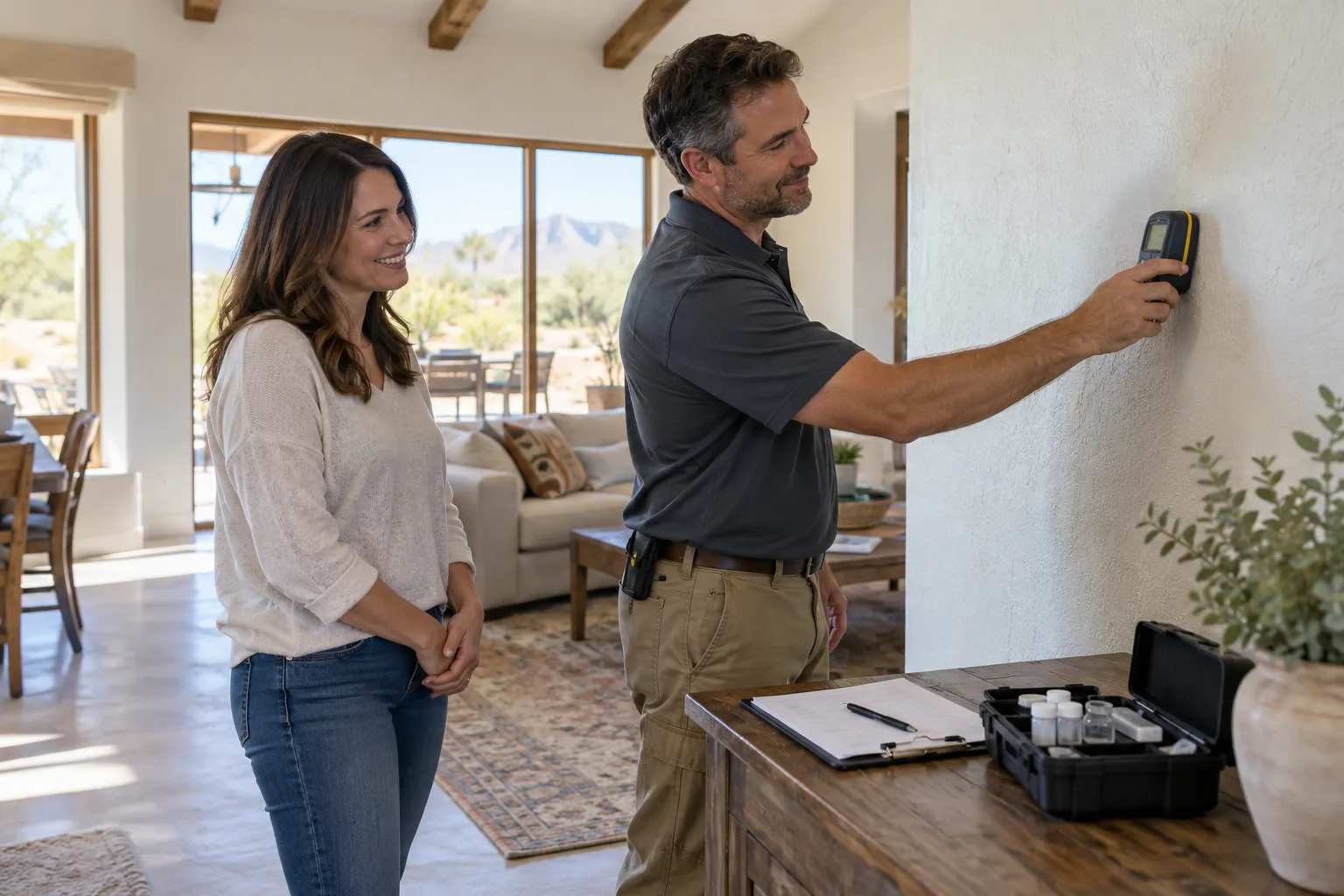
The provider walks the home and asks where you saw the problem. They check walls, ceilings, windows, under sinks, attics, and crawl spaces. Many use a moisture meter. Some use a thermal camera to spot cool, damp areas behind surfaces.
Expect a visit of one to three hours for a typical home. The provider notes what they find and may take samples.
Types of mold testing
There are three common kinds.
- Air samples: a pump pulls room air through a small cartridge. A lab counts spores and compares them with outdoor air.
- Surface samples: a swab or tape lift picks up material from a visible spot.
- Bulk samples: a small piece of drywall, wood, or insulation goes to the lab.
Not every job needs all three. A good provider picks tests that answer your question.
Certified mold testing: what to ask
You may see the phrase certified mold testing in your search. Ask each provider what training or certifications they hold and whether the lab they use is accredited. Ask for the answer in writing.
Licensing rules differ by state, so ask what applies where you live.
Understanding your results
The lab report lists mold types and spore counts. It can look scary. Read it with the provider. Ask what is normal for your area, since outdoor air changes with dry seasons, rain, and wildfire smoke.
What matters most is the comparison. Indoor levels far above outdoor levels, or a type that points to long-term damp, tell the real story.
Black mold and test results
Dark mold is not always the dangerous kind, and light mold is not always harmless. Color alone tells you little. A lab test can name what is growing. If the report points to heavy growth, the provider can explain the next step.
Inspection and removal: together or apart?
Some homeowners like separate companies, so the tester has no stake in the removal bid. Others like one provider for both because it moves faster. Both choices are fine.
If you split them, the inspection report becomes the plan for the removal quote. Share it with any provider who bids.
How to prepare for your inspection
- Clear a path to the attic hatch, crawl space, and water heater.
- Move boxes away from affected walls.
- Keep the home closed up for a few hours before air sampling, if the provider asks.
- Write down when you first noticed the smell or stain.
- Gather photos, plumbing repair records, and any past leak dates.
Questions to ask the provider
- What will you test, and why those spots?
- Which lab processes the samples?
- Will I get a written report with photos?
- What does the visit cost, and what is extra?
- If mold turns up, can you explain the next steps without pressure?
Request a callback to check provider availability in your area. Many providers can respond quickly.
Know when to stop
You did the smart part by looking early. Now let a provider do the part that needs tools and a trained eye. Keep the photos handy, keep the area dry, and get a written quote before you agree to any work.
What's Included
Visual Inspection
A provider checks walls, ceilings, attics, and crawl spaces for mold growth and signs of hidden moisture.
Air and Surface Sampling
Samples are collected with care and sent to a lab to name what is growing.
Moisture Source Check
Meters and cameras help find leaks and damp spots that feed mold behind surfaces.
Written Report
You get lab results and notes in plain words, so you can plan the next step with confidence.
What mold testing typically costs in the U.S.
Prices vary by home size, number of samples, and region. These are typical U.S. ranges only. Ask each provider for a written quote that lists the visit, each sample, and lab fees.
| Service | Typical range | Notes |
|---|---|---|
| Visual inspection only | $300 – $500 | Walk-through and moisture readings, no lab work |
| Inspection with air samples | $450 – $900 | Usually includes an outdoor comparison sample |
| Surface or tape-lift sample | $50 – $150 | Priced per sample, plus lab fees |
| Bulk material sample | $75 – $200 | Used when mold may be inside drywall or wood |
| Thermal imaging or moisture mapping | $100 – $400 | Often an add-on to the main visit |
| Whole-home inspection, several samples | $600 – $1,500 | Larger homes and crawl spaces cost more |
How It Works
Photograph the spot
Take clear photos with a coin for scale, and note the date and any smell.
Dry it
Wipe up water, run a dehumidifier, and keep the area closed off.
Request your estimate
Use the request form, or request a callback to check which independent providers in the Sacramento area are available.
Review the written report
Go over lab results with the provider and ask what the next step should be.
Why Call Secethnic Mold Help
Less Searching
Skip the long hunt through listings and reach an independent local provider while the spot is still small.
Clear Answers
A real inspection replaces guessing, so you know what you are dealing with.
Plain Talk
Providers explain results in simple words and say when a job can wait.
No Obligation
Request an estimate, compare it, and decide at your own pace.
Other Services
Need mold inspection & testing services in Sacramento?
Found mold or a musty smell? Request a callback to check provider availability, or send the request form and a local provider will follow up.
No obligationMold Inspection & Testing Services FAQ
How do I know if I need a mold inspection?
Look for a musty smell, visible spots, stains after a leak, or damp walls. If you can smell it but cannot see it, an inspection can find hidden growth. Photograph what you see before you call a provider.
Can I use a home mold test kit instead?
Kits can show that mold spores exist, but spores are in every home. They cannot tell you where the mold is or how much there is. A provider's inspection gives better direction.
How long does a mold inspection take?
Most visits for a typical home take one to three hours. Lab results usually take a few days to a week, depending on the lab. Ask the provider for their timeline when you request an estimate.
Tell us what happened
Found mold or a musty smell? Request a callback to check provider availability, or send the request form and a local provider will follow up.
No obligation